Gas prices around DeSoto seem to jump every week, but the amount you spend on fuel doesn’t have to. A few quick, low‑cost checks – like making sure your tires are properly inflated or swapping out a dusty air filter – can help you squeeze more miles from every gallon, whether you’re rolling down Belt Line Road or merging onto I‑35E. This guide walks you through simple maintenance steps and smarter driving habits that add up to real savings, smoother rides, and fewer trips to the pump. Let’s get started and turn each fill‑up into extra miles for your wallet and our community.

Table of Content:
1. Why Are Gas Prices High in DeSoto?
If you have ever topped off on Hampton Road and then noticed a lower price in nearby Lancaster, you already know how quickly fuel costs swing across Southwest Dallas County. Prices jump because of three main factors:
- Regional supply. DeSoto relies on the same North Texas pipelines that serve Dallas and Fort Worth. When a Gulf‑Coast refinery shuts down for hurricane repairs or scheduled maintenance, less gasoline flows up the line, and our local stations raise prices within hours.
- Local demand spikes. Friday‑evening traffic on Belt Line Road or a game day at AT&T Stadium sends thousands of extra vehicles onto the highway network. Higher demand plus limited supply equals higher pump prices.
- Built‑in taxes. The Texas fuel tax (20 ¢ per gallon for gasoline, unchanged since 1991) and the federal excise tax add a fixed cost to every fill‑up. Stations cannot absorb these charges, so they pass them along to drivers.
While you cannot control the numbers on the price sign, you can control how many miles you travel on each gallon. The maintenance steps below cost little or nothing but can save hundreds of dollars per year.
2. The Ten‑Minute Mileage Checklist
| Step | What to Check | Typical Cost | Potential MPG Gain* |
|---|---|---|---|
| 1 | Tire pressure | Free at many stations | +3 % |
| 2 | Motor‑oil level & correct grade | $35–$55 oil change | +2 % |
| 3 | Air‑filter cleanliness | $15–$25 | +10 % (if dirty) |
| 4 | Spark‑plug wear | $40–$80 per full set | +4 % |
| 5 | Wheel alignment | $75–$95 | +3 % |
*Approximate U.S. EPA averages. Your results depend on vehicle age, traffic patterns, and driving style. Tackling all five items could raise real‑world mileage up to 22 percent—enough to turn a 20 MPG family van into a 24 MPG commuter.
3. Tire Pressure: Your First Line of Defense
Why does it matters. Under‑inflated tires drag against the pavement of Pleasant Run Road as though you are driving through mud. Even a 3 PSI drop can steal 1–2 MPG.
Quick local tip. Many QuikTrip and RaceTrac stations along I‑35E provide complimentary air pumps. Keep an inexpensive tire‑pressure gauge in your glove box and check all four tires every month—or whenever the temperature swings 10 °F, a common North Texas weather quirk.
Four‑step check.
- Park, set your parking brake, and remove the valve‑stem cap.
- Press the gauge firmly against the stem until the hiss stops and the reading locks.
- Compare the number with the recommended PSI on the driver‑side door‑jamb sticker (often 32–35 PSI for passenger cars).
- Add or bleed air until you hit the target.
Extra benefit. Properly inflated tires last thousands of miles longer, stretching the time between $400‑plus replacement sets.

4. Pick the Right Oil for Texas Heat
Oil reduces friction inside your engine—think lotion on dry skin. DeSoto’s 100 °F July afternoons and long I‑35E commutes break down oil faster than mild‑climate driving.
- Follow the manual. Most late‑model cars run best on 5W‑30 or 0W‑20 full‑synthetic. Using the wrong viscosity forces the engine to work harder, squandering fuel.
- Time your changes. Modern synthetics can last 6,000–7,500 miles under ideal conditions, but dusty county roads off Parkerville Road add grit that shortens that window. If your vehicle’s dashboard reminder uses mileage alone, check the dipstick every 1,000 miles in summer.
- Leverage local deals. Auto‑parts stores such as O’Reilly Auto Parts on West Belt Line frequently bundle oil‑change supplies with filter rebates. Grab the house‑brand synthetic bundle to shave $10–$15 off the job.
Regular oil changes not only extend engine life but can boost fuel economy by roughly 2 percent—noticeable when gas prices flirt with $4 per gallon.
5. Air Filters: Let Your Engine Breathe
Imagine jogging while wearing a dust‑filled mask. That is your engine when the paper air filter looks gray and clogged.
When to replace. Every 12,000–15,000 miles or once a year. If you drive unpaved stretches near Cedar Hill State Park, pull the filter sooner.
Five‑minute DIY.
- Pop the hood and find the rectangular plastic air‑box.
- Release the clips or remove two screws.
- Lift out the old filter and hold it toward sunlight. If light does not pass through the pleats, toss it.
- Drop in a new filter—rubber rim up—and reseal the box.
For less than $20, a fresh filter can restore up to 10 percent lost mileage in older cars and smooth throttle response, too.
6. Spark Plugs and Ignition Health
Tiny yet mighty, spark plugs ignite the fuel‑air mixture thousands of times each minute. Worn plugs misfire, wasting unburned fuel as it exits the tailpipe.
- Replace on schedule. Standard copper plugs last around 30,000 miles, while iridium can stretch to 100,000. Check your owner’s manual for exact intervals.
- Watch for symptoms. A rough idle at the light on Wintergreen Road, sluggish acceleration merging onto I‑20, or a sudden MPG drop all hint at fouled plugs.
- DIY vs. shop. A socket wrench and a Saturday afternoon may save $120 in labor. If the engine layout is cramped (certain V‑6 crossovers), let a professional handle it to avoid stripped threads.
Swapping a $60 set of plugs on a four‑cylinder sedan can recoup $75–$100 in fuel the first year alone.
7. Wheel Alignment for Smooth I‑35E Cruising
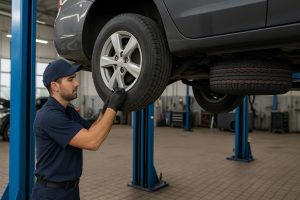
A single Cedar Hill pothole can knock wheels out of alignment, forcing the tires to skid sideways instead of rolling straight. Misalignment often steals 3–5 percent of your MPG and shreds tire treads.
Signs you need service.
- Steering wheel sits off‑center when the car is pointed straight.
- Vehicle drifts toward the curb on Hampton Road.
- One edge of a tire looks bald while the opposite edge still has tread.
Most DeSoto tire shops offer free computerized alignment checks. Budget an alignment every 12 months – or immediately after installing new tires – to protect both fuel economy and tire investment.
8. Trim the Fat: Extra Weight Costs Extra Fuel
Every 100 pounds in the trunk acts like a perpetual passenger, costing roughly 4 cents per gallon in wasted fuel.
Declutter these common offenders:
- Folding chairs from last weekend’s Lions Park picnic
- A full tool chest that can live in the garage
- Beach gear leftover from a Galveston trip
- Seasonal roof‑rack crossbars and cargo boxes
Lightening the load helps small engines the most, but even a full‑size SUV can gain 1–2 MPG once the clutter disappears.
9. Drive Smarter on DeSoto Streets
Maintenance sets the stage; driving habits deliver the payoff. Small adjustments to your daily routine compound over thousands of miles.
| Habit | Where It Helps | Fuel Saved |
|---|---|---|
| Coast to red lights | Cockrell Hill Road & Belt Line | 10–15 % |
| Limit idling to 30 seconds | Fast‑food lines | 8 % |
| Use cruise control at 55–65 MPH | I‑35E & I‑20 | 7 % |
| Combine errands in one loop | Pleasant Run shopping corridor | 15 % |
Final Takeaway
You do not need a hybrid or pricey gadget to fight high gas prices in DeSoto. Five simple maintenance tasks tires, oil, air filter, spark plugs, and alignment—combined with smart driving habits can save the average driver $200–$400 per year. That is enough for brisket at Evans Pit Bar‑B‑Que or tickets to a Rangers game.
Pick one tip tonight: check tire pressure before dinner or jot “oil change” on tomorrow’s to‑do list. Each small action compounds into real savings, cleaner air, and a smoother ride along every road in DeSoto and beyond.
Ready for hands‑on help that comes to you? Our mobile mechanic service in DeSoto keeps your car running at peak efficiency. Book a visit today and start turning every fill‑up into extra miles—and extra savings.