Getting a flat tire is one of the most frustrating car problems—especially when you’re far from home or without help. But here’s the truth: you don’t need Triple-A or a tow truck to get back on the road. With a few basic tools and the right steps, you can safely and confidently fix a flat tire on your own. One method we always recommend for fast results is using a properly inflated spare tire—it’s still the most reliable and immediate solution when you’re stuck. The rest of this article shows you exactly how to handle every part of the job, whether you’re on a quiet street, at work, or pulled over on the highway. Keep reading, and you’ll learn how to recognize a flat, remove it, install a spare, and prevent it from happening again.
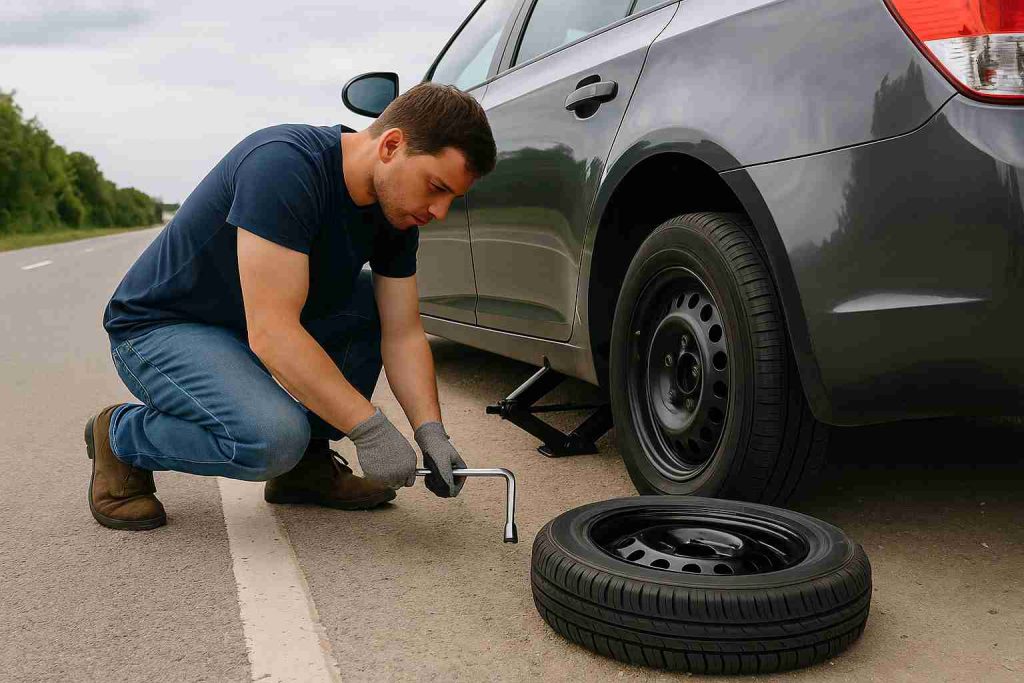
Table of Contents
Why It’s Important to Know How to Fix a Flat Tire
Flat tires always seem to happen at the worst time. You’re late for work. You’re out of cell service. Or it’s pouring rain. Knowing how to fix a flat on your own gives you the freedom to act fast, without relying on anyone else.
Key reasons it matters:
- Saves time: Skip the wait for roadside help—usually 30 to 90 minutes.
- Saves money: Avoid tow truck or emergency service fees, which can cost $50 to $150.
- Boosts safety: Get off the side of the road quickly.
- Gives peace of mind: You won’t feel helpless in a bad situation.
If you drive regularly, learning how to fix a flat is just as important as knowing how to fill your tank or check your oil.
How to Tell If You Have a Flat Tire
Most drivers don’t know they have a flat until it’s too late. But catching it early can prevent a blowout or wheel damage. Here are the most common signs:
- Pulling to one side: Your steering feels uneven or your car drifts.
- Low rumbling or flapping sounds: Especially at lower speeds.
- Warning light: Most cars have a Tire Pressure Monitoring System (TPMS) that alerts you to pressure drops.
- Squashed or sagging tire: Check your tires visually, especially before and after long drives.
Once you spot the signs, pull over to a flat, safe area. Turn on your hazard lights and apply the parking brake before doing anything else.
What Tools You Need to Fix a Flat Tire Yourself
Before you fix the flat, make sure you have the right tools. Many cars come with basic tire-changing tools in the trunk, but it’s smart to double-check and add a few extras.
Basic items to carry in your car:
- Spare tire: Make sure it’s inflated and in usable condition.
- Jack: For lifting your vehicle off the ground.
- Lug wrench: To loosen and tighten lug nuts.
- Wheel chocks or large stones: To keep the car from rolling.
- Flashlight: Essential at night or in poor lighting.
- Tire pressure gauge: To check air levels.
- Gloves and shop towel: To keep your hands clean.
- Plug or sealant kit (optional): Helpful if no spare is available.
These items can be packed in a small bin or tool bag. A full emergency tire kit can cost under $100 and can save you hundreds in service fees.
Step-by-Step Guide to Fixing a Flat Tire Without Assistance
Knowing the process is just as important as having the tools. Follow these steps in order for a safe and smooth tire change:
Step 1: Park Safely and Set Up
Before touching anything, make sure you and your car are safe.
- Pull into a level area away from traffic.
- Turn on your hazard lights.
- Apply the parking brake.
- Place wheel chocks behind the tires opposite the flat.
- Retrieve your tools and spare tire.
Never work on a car near fast traffic, on a hill, or on loose gravel.
Step 2: Loosen the Lug Nuts
Before jacking up the car:
- Use the lug wrench to turn each lug nut counterclockwise.
- Don’t remove them yet—just break the tension.
- If they’re stuck, press your foot on the wrench or use extra leverage.
Lug nuts can be very tight, especially if installed by a mechanic with a power tool.
Step 3: Lift the Car With the Jack
Refer to your car manual for the exact jack point. It’s usually just behind the front wheels or in front of the rear wheels, near the frame.
- Position the jack under the correct spot.
- Raise the car until the flat tire is 2–3 inches off the ground.
- Make sure the jack is level and steady before moving on.
Take your time here—rushing can lead to dangerous slips.
Step 4: Remove the Flat Tire
Now that the car is raised:
- Finish unscrewing the loosened lug nuts.
- Keep them in a secure spot so you don’t lose them.
- Pull the tire straight off the studs and set it down flat.
If it’s stuck, rock it gently or tap around the edge to loosen it from the hub.
Step 5: Decide Between Spare Tire or Plug Kit
This is the moment where you choose how to move forward:
- Use the spare tire if the damage is big, on the sidewall, or you’re not confident in a plug repair.
- Use a plug kit if the puncture is small, like a nail hole in the tread, and you’re experienced with repairs.
A spare tire gets you back on the road fastest and is the safest choice if you’re in a rush or unsure.
Step 6: Install the Spare Tire
If you’ve chosen the spare:
- Align the holes of the spare tire with the studs.
- Push it into place and screw on the lug nuts by hand.
- Lower the car slowly using the jack.
- Once it’s down, tighten the lug nuts in a crisscross (star) pattern.
Avoid tightening one side all the way first. The star method ensures even pressure.
Step 7: Clean Up and Get Moving
Before you drive away:
- Double-check that all lug nuts are tight.
- Test the tire with a firm tug to ensure it’s secure.
- Check air pressure in the spare if you have a gauge.
- Pack your tools and stow the flat tire.
Drive carefully and don’t go above 50 mph on a temporary “donut” spare. Visit a tire shop as soon as possible.
What to Do If You Don’t Have a Spare Tire
No spare? Don’t panic—you still have a few options:
- Tire sealant spray: A can of emergency sealant can patch small holes. Shake, attach to valve stem, and spray. Then drive immediately so the sealant spreads.
- Plug kit: Includes tools and rubber plugs. Insert the plug with a special tool to stop air leaks.
- Call mobile tire repair: Many services will come to you, and they’re often faster and cheaper than a tow truck.
- As a last resort, call a tow truck: Only if none of the above are available.
If you’re driving a newer car, check if it has a built-in air compressor and sealant system. These are becoming more common.
How to Prevent Flat Tires in the Future
Avoiding a flat tire is even better than knowing how to fix one. Here’s how to reduce your chances of running into trouble:
- Check tire pressure monthly: Underinflated tires wear out faster and are more prone to punctures.
- Look for wear and tear: Watch for cracks, bulges, or exposed wires.
- Rotate tires regularly: Every 6,000 to 8,000 miles keeps wear even.
- Replace tires with low tread: Use the penny test—if you see all of Lincoln’s head, it’s time for new ones.
- Avoid potholes and road debris: Drive carefully through construction zones or poorly maintained roads.
- Keep an emergency kit: Having the right tools means fewer headaches when problems happen.
Tire safety is ongoing. A few minutes each month can save you hours later.
The True Value of Learning to Fix a Flat
Knowing how to fix a flat tire isn’t just about convenience—it builds confidence and independence. You’ll avoid unexpected costs and the stress of waiting for help. You’ll also protect your car from damage that can happen if you drive too long on a deflated tire.
This small skill can make a big difference. It’s something every driver should know and practice. It prepares you for road trips, emergencies, and everyday commutes with confidence.
Final Thoughts
Fixing a flat tire without Triple-A or roadside assistance isn’t hard—but it does take a little patience and preparation. With the right tools in your trunk and the steps in your head, you’ll be ready to handle flats wherever they happen. The next time you hear that dreaded thump or feel your car dragging to one side, you won’t panic—you’ll act. So take a few minutes today to check your spare, stock your kit, and review these steps. A little effort now can save you hours later and give you peace of mind every time you drive.
FAQs
How to fix a flat tire without AAA?
Park on level ground, turn on hazards, loosen lug nuts, jack up your car, remove the flat, mount spare, lower car, tighten nuts in star pattern, and check pressure before driving.
Can I change a flat tire by myself without help?
Yes. Park safely, set parking brake and chocks, loosen lug nuts, jack up at correct point, swap in spare tire, lower car, then tighten lug nuts in a star pattern until snug before driving.
What tools do I need to change a flat tire alone?
You need a spare tire, jack, lug wrench, wheel chocks or heavy blocks, gloves, and a tire pressure gauge. A plug kit or sealant spray helps for small punctures when spare is unavailable.
How to safely jack up car to change a flat tire?
Park on flat ground, set the brake, chock opposite wheels, then place jack at the manufacturer’s jacking point. Raise the tire until it’s a few inches off the ground before removing lug nuts.
How long to change a flat tire yourself?
You can change a flat tire yourself in about 20–30 minutes. That covers parking safely, gathering tools, jacking up the car, swapping tires, lowering the car, and tightening lug nuts in a star pattern properly.
Can you drive on a donut spare tire safely?
A donut spare lets you drive to a repair shop, but only up to 50–70 miles at under 50 mph. It’s a temporary fix—replace it with a full-size tire as soon as possible for safe driving.
Shat to do if I don’t have a spare tire?
Without a spare, use a tire plug kit or sealant spray for small punctures, inflate to the right PSI, and drive slowly to a shop. If that fails, call a mobile repair service or tow truck for help.
How to plug a tire puncture with a repair kit?
Use a plug kit for small holes: locate and clean the puncture, remove the object, ream the hole, thread a rubber plug on the insertion tool, push in fully, trim flush, and inflate to the right PSI.